
Contra Costa County Superior Court Overview
California unified its trial courts in 1998. Each of the 58 counties runs one Superior Court, and Contra Costa is no exception. The Superior Court of California, County of Contra Costa hears felony and misdemeanor crimes, civil cases of any dollar amount, small claims, unlawful detainer suits, family law matters, juvenile delinquency and dependency cases, probate, conservatorship, guardianship, and traffic. There is no separate county-level "district court" in California. The federal U.S. District Court for the Northern District of California is a separate system that covers federal matters from the county.
Contra Costa Superior Court is part of the First Appellate District. Appeals from felony and unlimited civil cases move to the California Court of Appeal, First Appellate District, then on discretionary review to the California Supreme Court. Limited civil, misdemeanor, and infraction appeals first go to the Superior Court appellate division. The court is led by Presiding Judge Christopher Bowen, who sits in Department 1, Room 209, with public line (925) 608-1101 per the 2026 judicial directory.
The court runs the new Court Public Portal at kiosk-cacontracosta.tylertech.cloud/Portal/. The portal moved on April 27, 2026 from the old vendor to a Tyler-hosted system. Traffic cases use a separate Traffic Public Portal hosted by the court. The court also released a beta AI chatbot called Coco in February 2026 to help with public questions.
List of Contra Costa County Superior Court Locations
Seven public court facilities serve Contra Costa County. Three sit in downtown Martinez near the county seat. The other four sit in Richmond, Pittsburg, and Walnut Creek to serve West County, East County, and central county users. The court locations index lists each building, its address, the case types heard there, and a public phone line.
The Wakefield Taylor Courthouse is the main civil, criminal, probate, and administrative hub. The Wakefield Taylor location page notes that the Court Records Unit sits in Room 103 and is open 8:00 a.m. to 4:00 p.m. Monday through Friday. Court phones answer 8:00 a.m. to 3:00 p.m.
| Court Location | Address | Phone | Jurisdiction |
|---|---|---|---|
| Wakefield Taylor Courthouse | 725 Court Street, Martinez, CA 94553 | (925) 608-1000 | Criminal, civil, probate, court administration, Presiding Judge, Court Records. |
| Court Records (Non-Criminal) | 725 Court Street, Room 103, Martinez, CA 94553 | (925) 608-1000 | Non-criminal record viewing, copies, and certifications. |
| A.F. Bray Courthouse | 1020 Ward Street, Martinez, CA 94553 | (925) 608-1000 | Martinez court facility, criminal and jury functions. |
| Peter L. Spinetta Family Law Center | 751 Pine Street, Martinez, CA 94553 | (925) 608-1000 | Family law, DVRO, ex parte, mediation, custody recommending counseling. |
| George D. Carroll Courthouse (Richmond) | 100 37th Street, Richmond, CA 94805 | (925) 608-1000 | Civil, small claims, criminal, traffic, jury for West County. |
| Richard E. Arnason Justice Center (Pittsburg) | 1000 Center Drive, Pittsburg, CA 94565 | (925) 608-1000 | Civil, small claims, unlawful detainer, criminal, traffic, family, juvenile for East County. |
| Walnut Creek Juvenile and Traffic Center | 640 Ygnacio Valley Road, Walnut Creek, CA 94596 | (925) 608-1000 | Traffic and juvenile/traffic matters. |
The court groups service by region. Martinez handles the main bulk of work. The Arnason Justice Center is the East County hub and serves Antioch, Bay Point, Bethel Island, Brentwood, Byron, Discovery Bay, Knightsen, Oakley, and Pittsburg. The jury assembly room there has filtered water, vending, a lactation room, and a Mount Diablo view. Note: every entrant goes through security screening at each Contra Costa County Superior Court building.
Superior Court vs. Court of Appeal vs. California Supreme Court
California has a three-tier state court system. Contra Costa County Superior Court is the trial level. The California Court of Appeal is the intermediate level. The California Supreme Court is the top level. Each tier hears different work, uses different rules, and has different judge counts. The table below shows how the three tiers split duties for cases that start in Contra Costa.
| Superior Court | Court of Appeal | California Supreme Court | |
|---|---|---|---|
| Role | Trial court of general jurisdiction | Intermediate appellate court | Highest state court |
| Cases Heard | Civil, criminal, family, probate, juvenile, traffic, small claims | Appeals from Superior Court felony and unlimited civil | Discretionary review and automatic death penalty appeals |
| Jury Trials | Yes | No | No |
| Panel Size | One judge, jury when set | Three justice panels in the First District | Seven justices |
| Local Reach | Contra Costa County only | First Appellate District (multi-county) | All of California |
Limited civil, misdemeanor, and infraction appeals do not go straight to the Court of Appeal. Those route to the Superior Court appellate division first. Felony appeals and unlimited civil appeals go to the First District. The state Supreme Court reviews fewer than five percent of petitions it receives. Court of Appeal rules and Supreme Court rules of court are set at the state level, while local rules of the Contra Costa County Superior Court control filings at the trial level.
How a Case Moves Through the Contra Costa County Court System
The basic path is the same for civil and criminal cases, but the steps differ. A case starts in Contra Costa County Superior Court. After judgment, a losing party may appeal up the ladder. The arrow path below shows the appellate route used by most state cases from the county.
Appellate route: Superior Court › California Court of Appeal (First Appellate District) › California Supreme Court.
Criminal flow: Arrest › Booking › Arraignment › Preliminary Hearing or Grand Jury › Trial Court Arraignment › Pretrial Motions › Trial › Sentencing › Appeal.
Civil flow: Complaint Filed › Answer or Demurrer › Case Management Conference › Discovery › Mediation or Settlement Conference › Trial › Judgment › Notice of Appeal.
For Contra Costa traffic and infraction cases, the path is shorter. Most cases end at arraignment with a plea, traffic school, or fine. Trials run in Department 50 in Richmond and Walnut Creek and Department 54 in Pittsburg. Family cases move at the Spinetta Family Law Center and follow the dissolution roadmap with mandatory disclosure and judgment forms.
Civil, Family, Criminal, Probate, and Traffic Divisions
The Contra Costa County Superior Court splits work by division. Each division has its own filing window, calendar, and rules. The court website lists each division on the main directory page. Filings can be made in person, by drop box, by mail, or by e-filing for most case types.
The civil division at Wakefield Taylor hears unlimited civil, limited civil, small claims, name change, and most general civil matters. The criminal division also runs from Wakefield Taylor and A.F. Bray for Martinez cases, with regional criminal calendars at Richmond and Pittsburg. The family division runs from the Spinetta Family Law Center for divorce, custody, support, domestic violence restraining orders, and parentage cases. Probate, including decedent estates, conservatorship, and guardianship, runs through Wakefield Taylor. Traffic runs from Walnut Creek, Richmond, and Pittsburg.
Specialty calendars include collaborative justice and problem-solving court programs. The court describes Collaborative Justice Courts as programs that pair judicial supervision with treatment and recovery services. Contra Costa has used drug, mental health, veterans, and reentry program models, although a single static current roster of specialty courts is not posted on the court website.
Appeals from Contra Costa Superior Court
The First Appellate District of the California Court of Appeal hears felony appeals and unlimited civil appeals from the Contra Costa County Superior Court. The First District sits in San Francisco and is divided into five divisions. Three-justice panels decide most appeals. Briefing is set by the California Rules of Court, and oral argument is allowed when requested.
The Superior Court appellate division at Wakefield Taylor hears limited civil, misdemeanor, and infraction appeals from Contra Costa trial courts. The appellate division is staffed by Superior Court judges sitting in panels. Notices of appeal must be filed within the statutory window after entry of judgment. A late notice usually ends the right to appeal.
Federal Courts That Cover Contra Costa County
Contra Costa federal cases do not start in the state Superior Court. The federal trial court for the county is the U.S. District Court for the Northern District of California. Appeals from federal cases go to the Ninth Circuit, then potentially the U.S. Supreme Court. Federal records are public but use the federal PACER system rather than the county court portal.
The federal trial court is reached online at cand.uscourts.gov. A lead-in to the federal trial court page is the home page of the U.S. District Court for the Northern District of California.
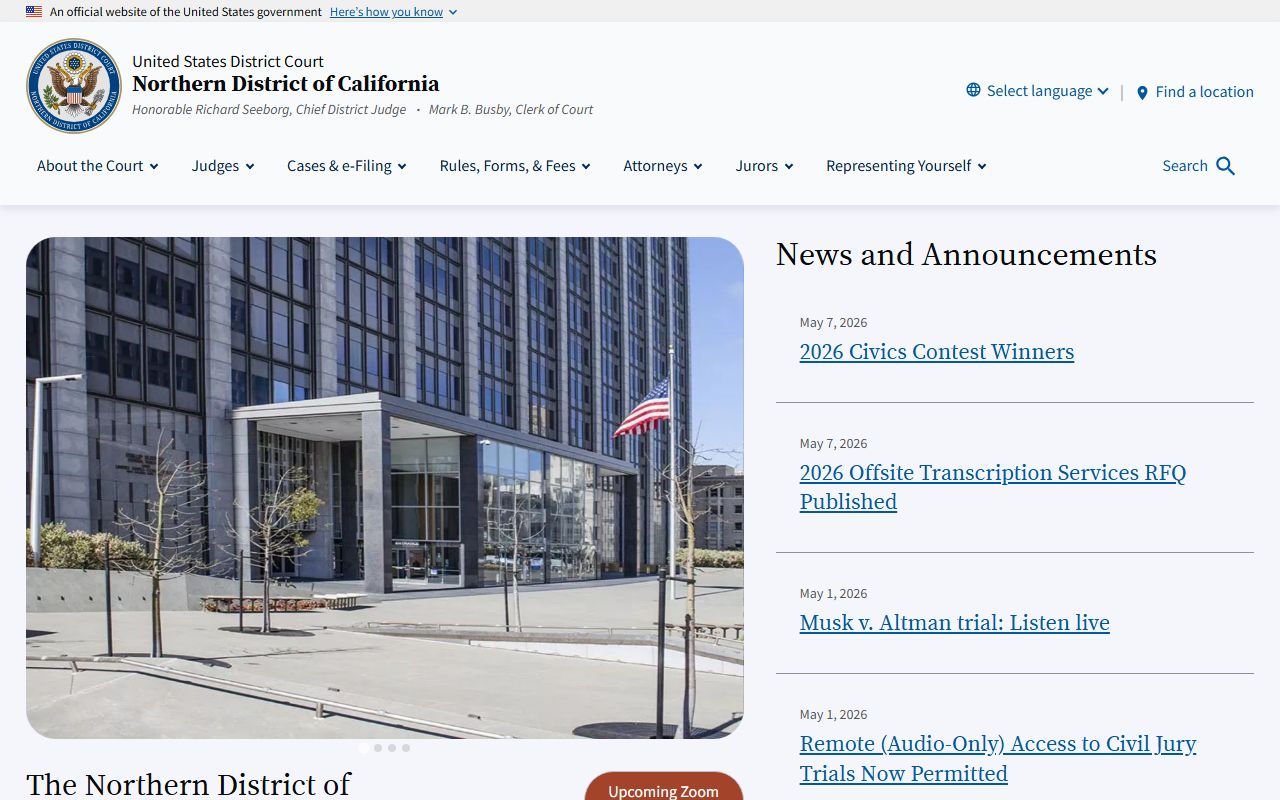
The Northern District homepage lists courthouse locations in San Francisco, Oakland, and San Jose. Civil and criminal filings, judge information, and local rules are all posted there. The Oakland courthouse is the closest federal venue for many Contra Costa County matters.
Federal filings and dockets are accessed through the public access system known as PACER. PACER charges per-page fees unless the user qualifies for a waiver. The PACER landing page explains how to register and how to log in. The federal court records page for the county directs users to pacer.gov for case lookup.
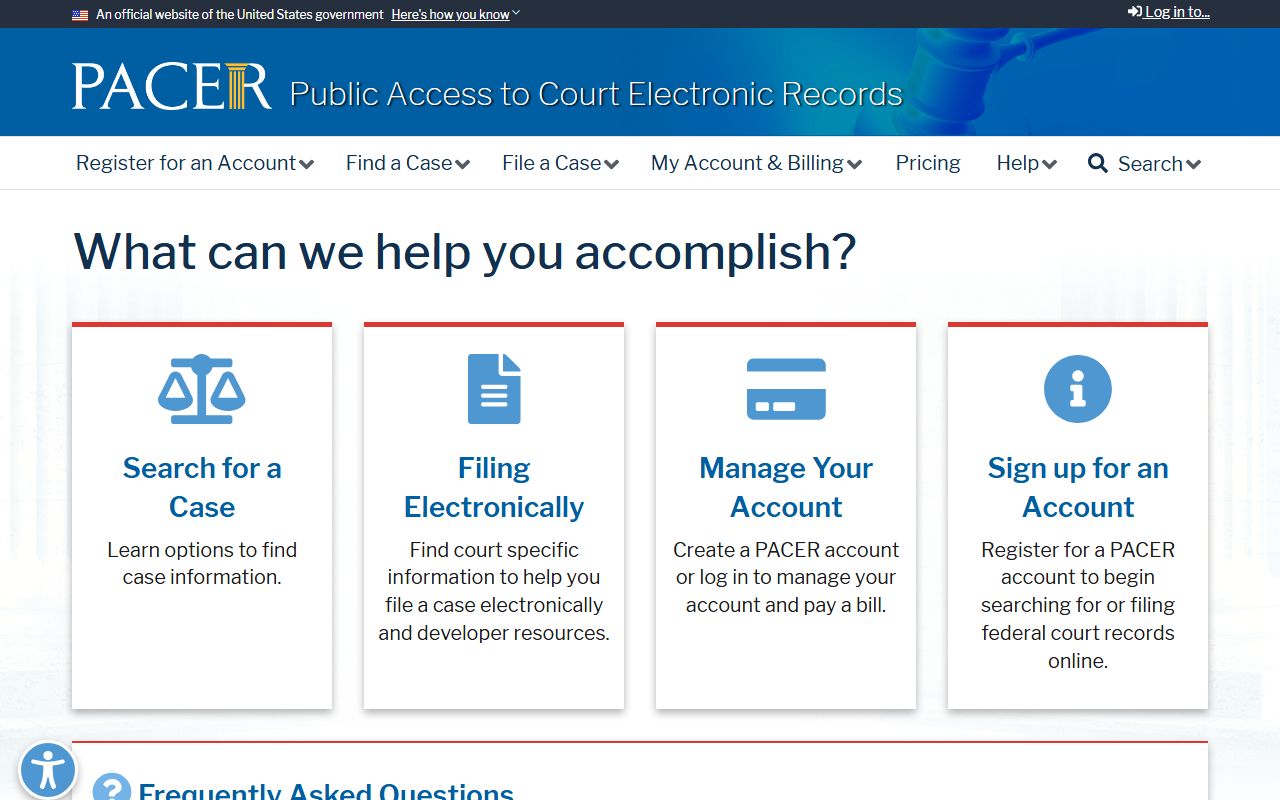
The PACER service supports searches by case number, party name, and court. Most federal documents in Contra Costa cases are downloaded through PACER once a user has an account.
The Northern District also runs an electronic filing gateway called CM/ECF. Lawyers file pleadings through ecf.cand.uscourts.gov. Self-represented filers use limited e-filing as the court allows.
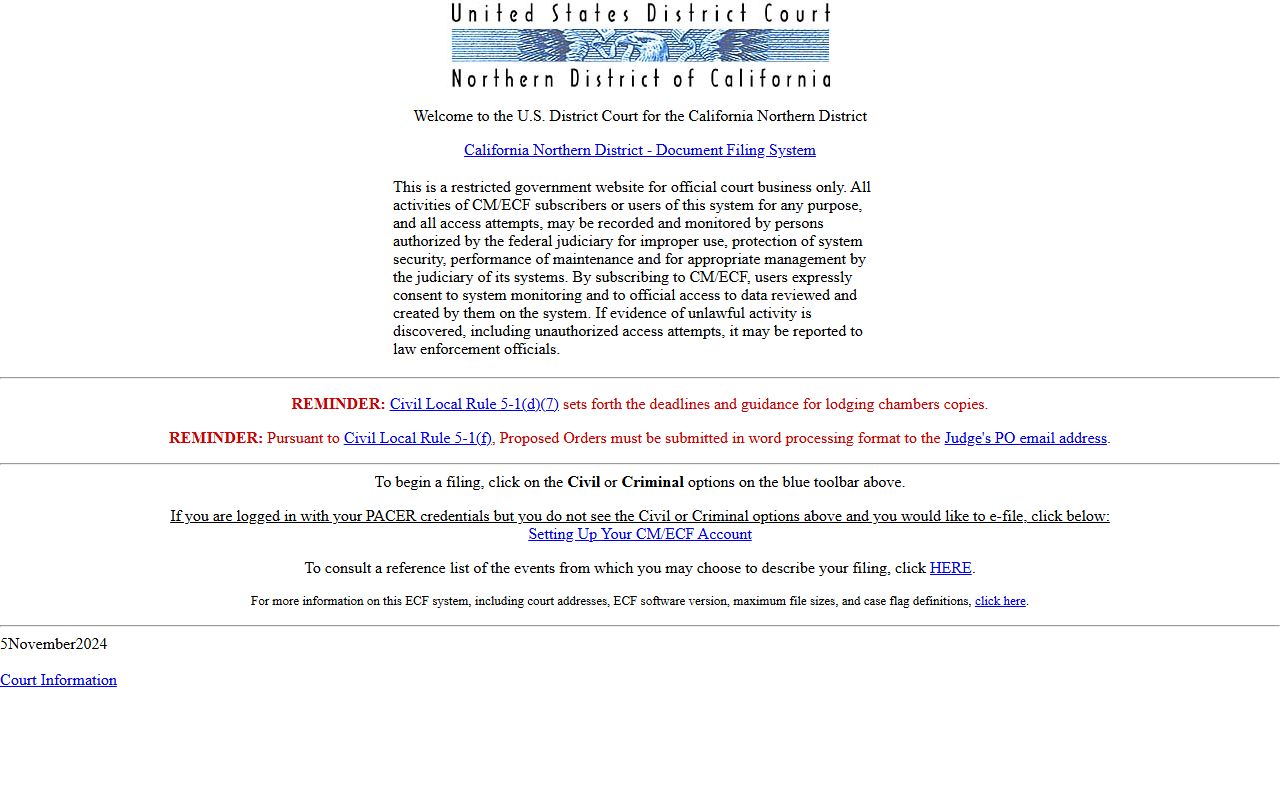
The CM/ECF gateway is the working day-to-day file room for attorneys. Public access still flows through PACER, even for cases that started in CM/ECF.
Bankruptcy cases from Contra Costa go to a separate federal court. The U.S. Bankruptcy Court for the Northern District of California is reached at canb.uscourts.gov. Chapter 7, Chapter 13, and Chapter 11 filings move through the bankruptcy court, not the U.S. District Court.
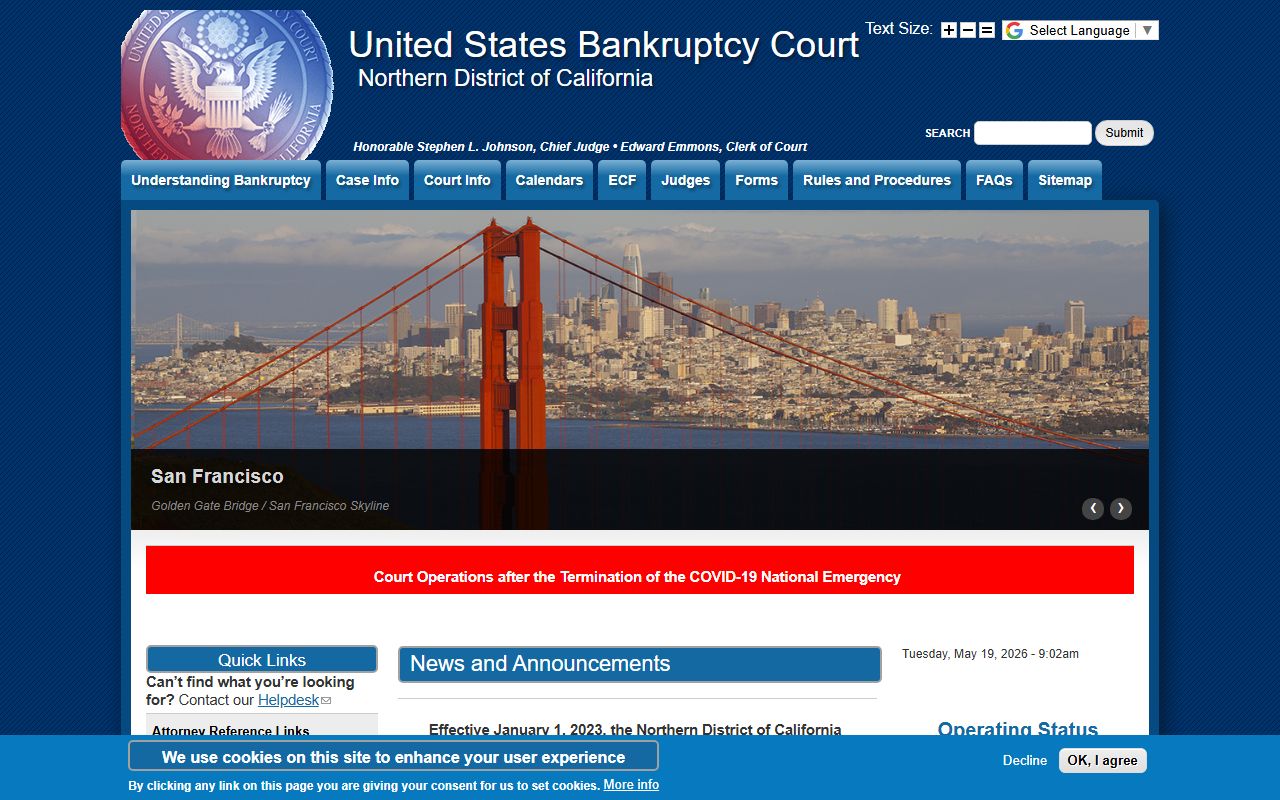
The bankruptcy court keeps its own forms, rules, and PACER docket. Contra Costa filers most often use the Oakland bankruptcy courthouse.
The U.S. Attorney for the Northern District of California prosecutes federal crimes that affect Contra Costa County. The office page is justice.gov/usao-ndca.
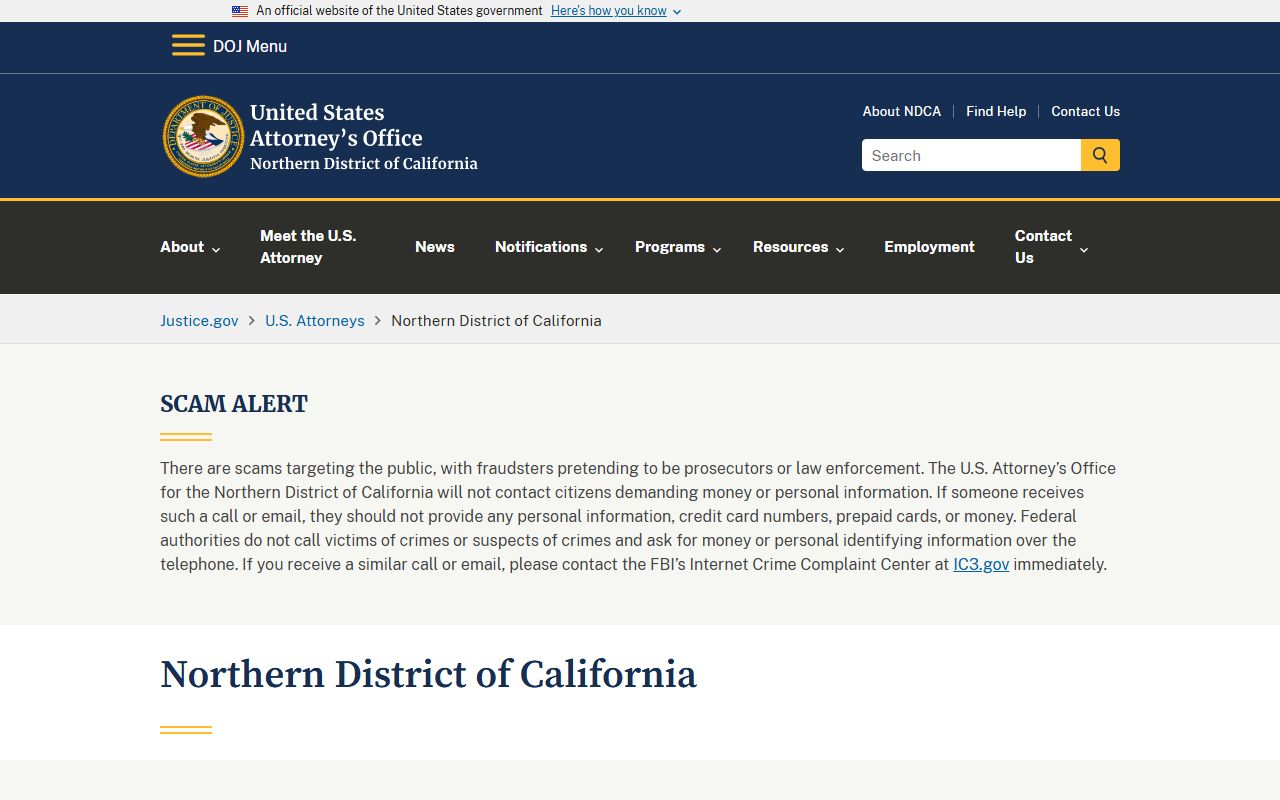
The U.S. Attorney site lists press releases, divisions, and contact lines for federal criminal complaints. Many local federal indictments tied to Contra Costa appear there.
Federal appeals from the Northern District go up to the Ninth Circuit. The Ninth Circuit homepage is at ca9.uscourts.gov and lists oral argument calendars, opinions, and rules.
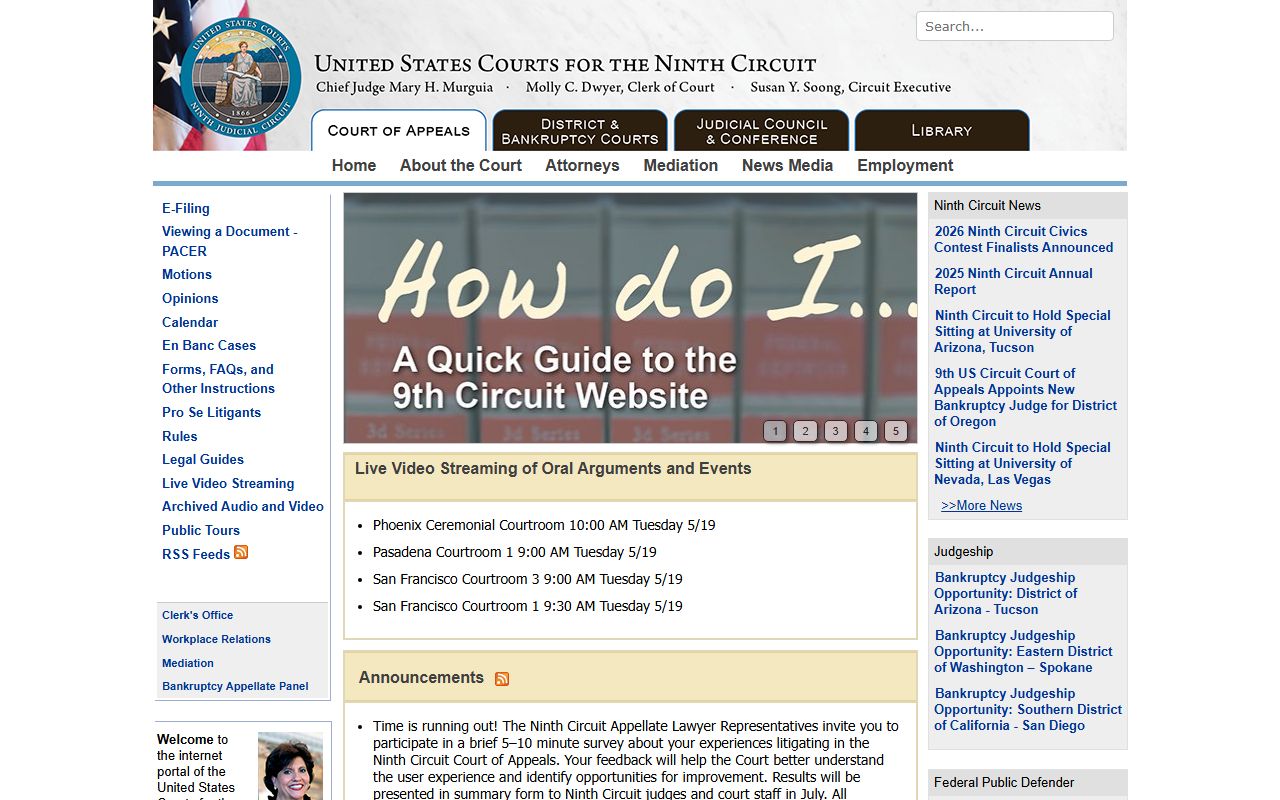
The Ninth Circuit also publishes its docket through PACER. Contra Costa federal appellate filings end there before any possible U.S. Supreme Court petition. Note: state Superior Court cases never reach the Ninth Circuit because state and federal court systems remain separate.
Judicial Leadership and Court Administration
Presiding Judge Christopher Bowen leads the Contra Costa County Superior Court in 2026. He sits in Department 1, Room 209, at Wakefield Taylor, with a public phone of (925) 608-1101. The Presiding Judge sets local rules, oversees calendars, and assigns judges to divisions. The court has additional supervising judges in civil, criminal, family, juvenile, and probate.
The Court Executive Officer manages day-to-day administration, the Court Records Unit, jury services, and clerk operations. The court works closely with the Contra Costa County District Attorney, the Public Defender, the Alternate Defender Office, and the Contra Costa County Bar Association on calendaring and assignment issues.