
California Public Records Act in Contra Costa County
The California Public Records Act, now codified at Government Code section 7920.000 et seq., is the main law for public records held by state and local agencies. It descends from the 1968 act and was recodified effective 2023. The CPRA supports inspection and copying of public records unless a clear exemption applies. In Contra Costa County, the CPRA covers files held by county departments, the Sheriff's Office, the Clerk-Recorder, city offices, and most other public agencies.
The agency may withhold a record only when a specific exemption applies. Government Code section 7922.000 sets the balancing test, which lets an agency withhold when the public interest in nondisclosure clearly outweighs disclosure. That test is often used for active investigations and sensitive personnel files. See the screenshots below for both statutes.
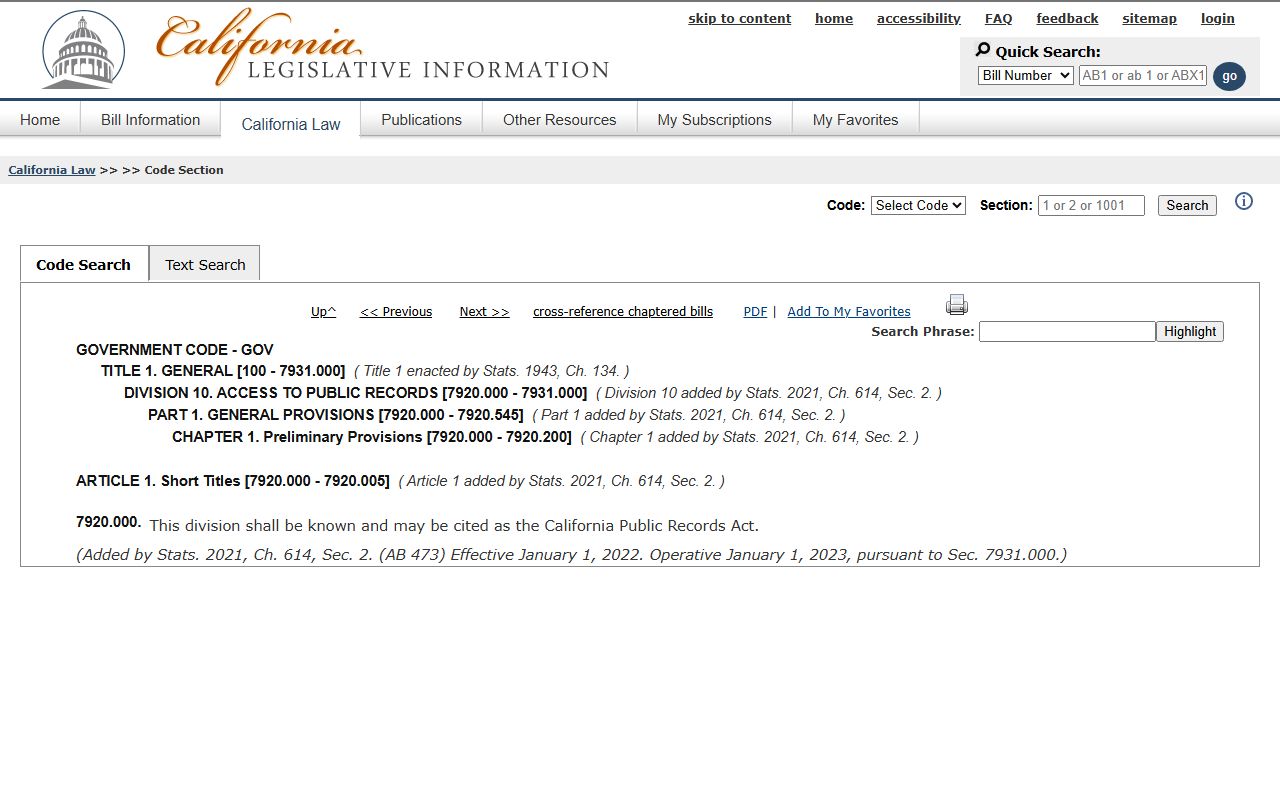
The CPRA covers most paper, electronic, and metadata held by an agency. It does not cover federal records or most court case files.
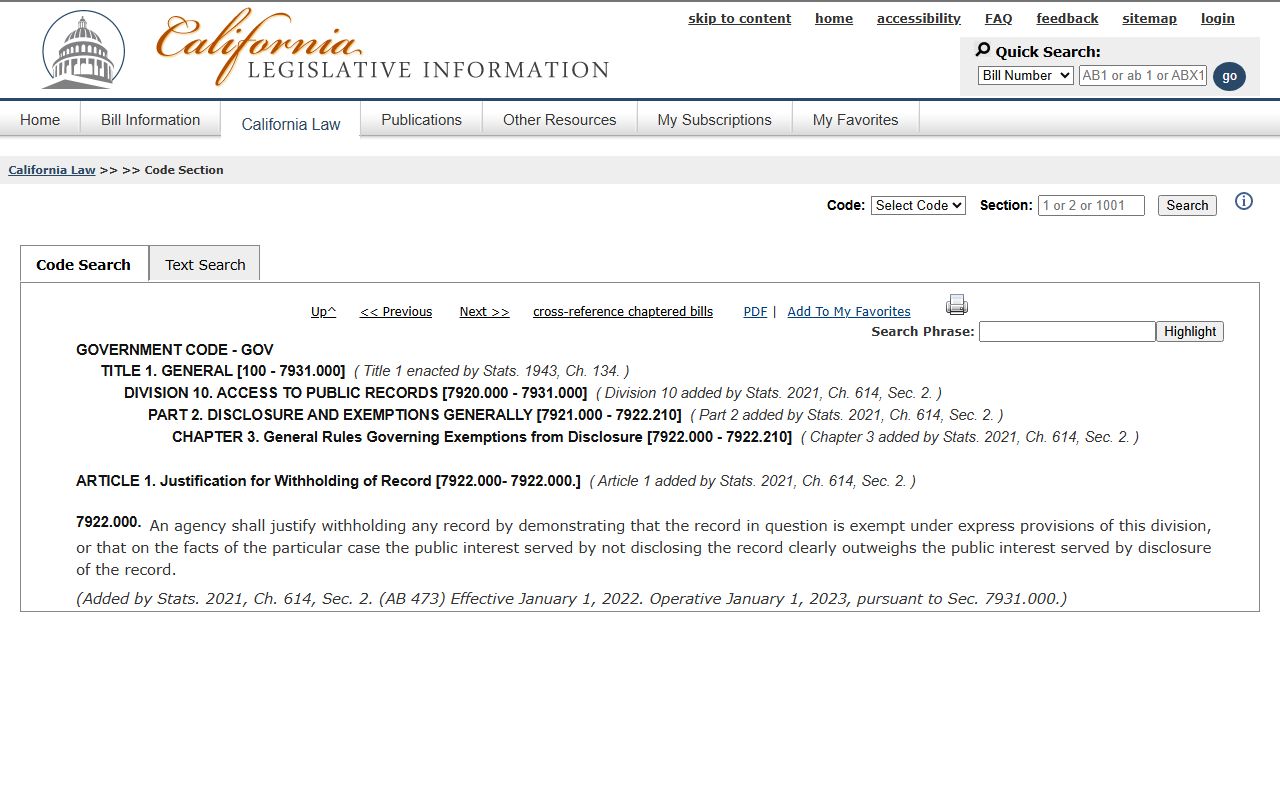
Agencies must justify any withholding under section 7922.000 or another listed exemption.
Judicial Administrative Records and Rule 10.500
Court case records are not CPRA records. Court case files use California Rules of Court, statutes, and case-specific sealing orders. Judicial administrative records, such as court budgets, contracts, and policy files, fall under California Rule of Court 10.500. The Superior Court of California, County of Contra Costa uses form PI-01 for Rule 10.500 requests. The PI-01 form expressly says it is not the right form for case-file records such as judgments, decrees, orders, complaints, or other documents from a court case.
For court case records, the right counter is Court Records at Wakefield Taylor Courthouse. For court budget, policy, and administrative files, the right form is PI-01. The split matters because the wrong form delays the response. Court records use the Superior Court fee schedule, while CPRA records use agency-set duplication rates capped by statute.
Court Records Rules That Shape Access
Several California Rules of Court drive what is public and what is not in Contra Costa County court records. Rule 2.400 governs the use of original court records and public inspection through the clerk. Rule 2.503 calls for courthouse electronic access but bars remote public access for family, juvenile, mental health, criminal, and other sensitive case types. Rule 2.550 treats court records as presumptively open unless confidentiality or sealing law applies, with strict findings for any sealing order.
See Rule of Court 2.400 and Rule of Court 2.550, with screenshots below.
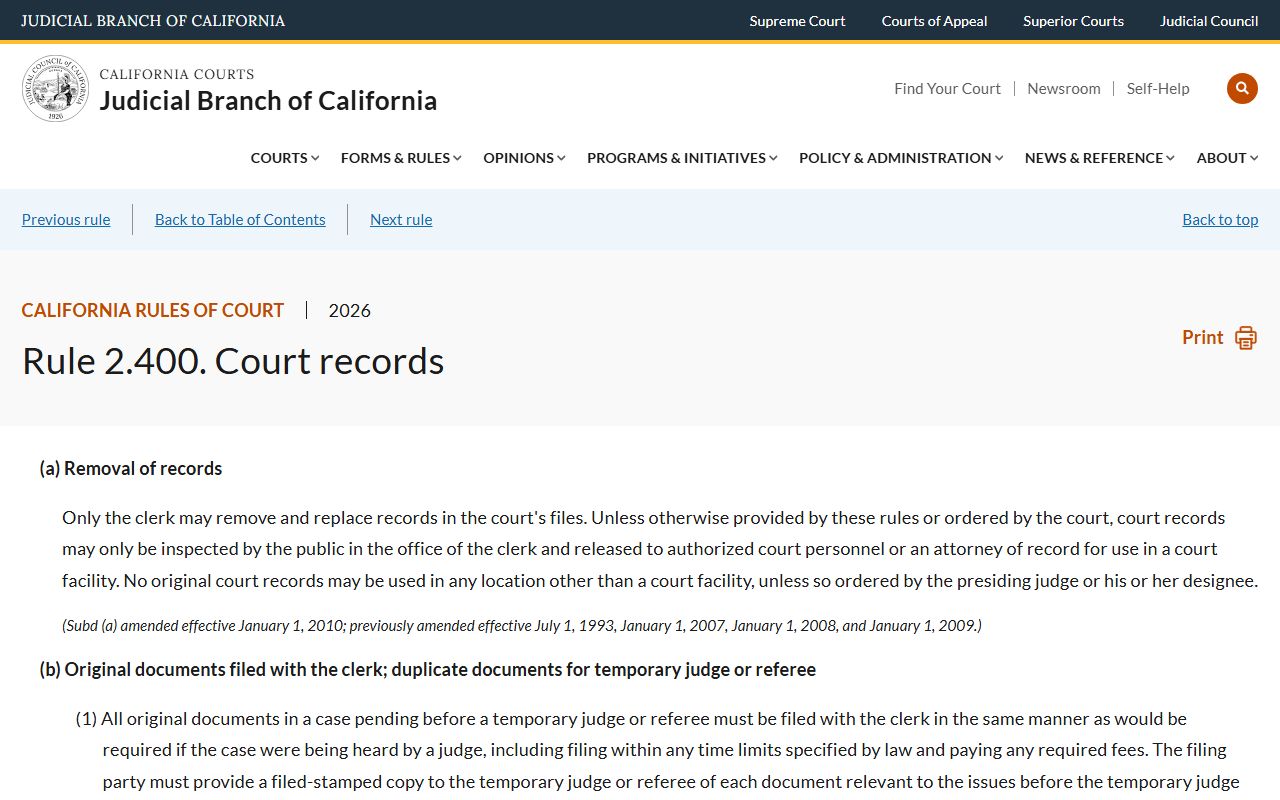
Rule 2.400 covers original case records and clerk-managed access at the courthouse.
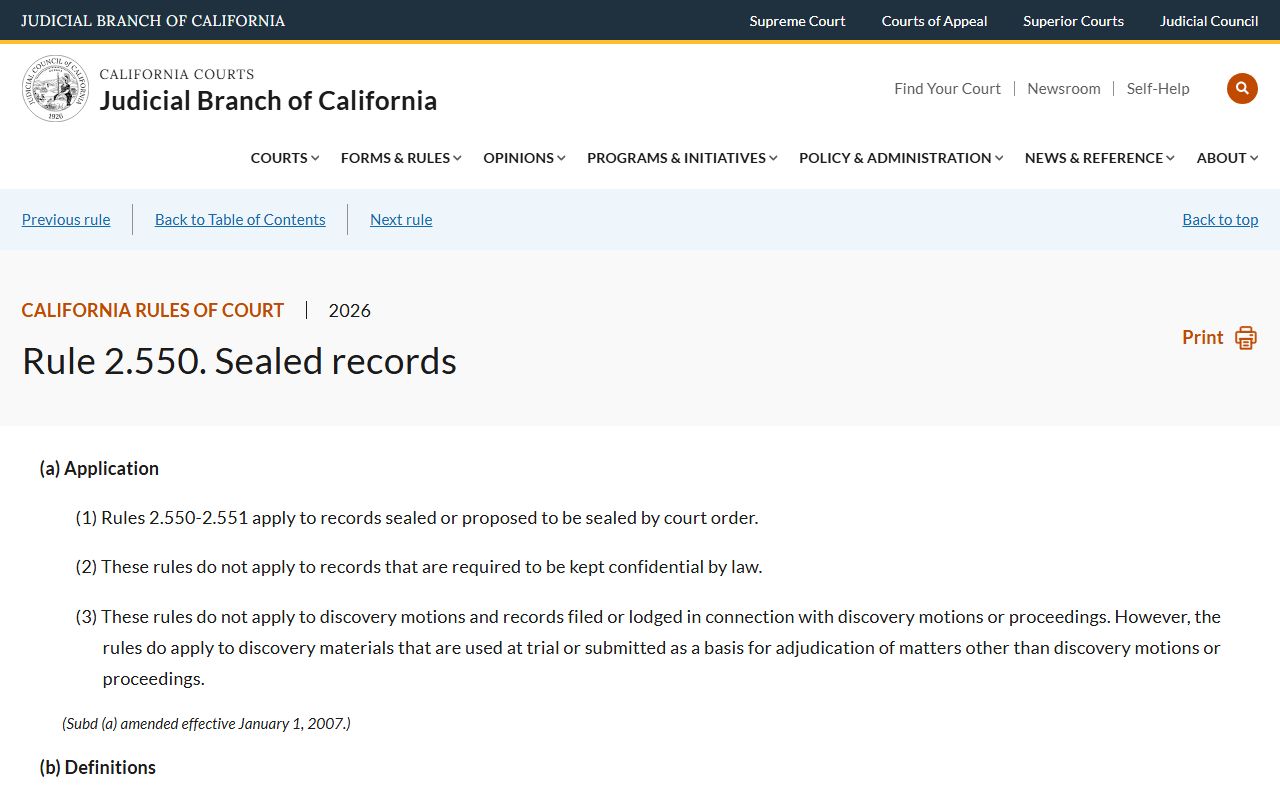
Rule 2.550 sets the sealing test that any party must meet to keep a record out of public view.
How to File a Public Records Request in Contra Costa County
The right channel depends on the record. The list below covers both the CPRA path for county records and the Rule 10.500 path for judicial administrative records. For court case files, use Court Records instead, since neither path applies there.
- Pick the right office. Use the agency that holds the file. For county records, that may be the Sheriff, Clerk-Recorder, or a department like Public Works. For judicial administrative records, use the Superior Court.
- Describe the records. Name the document type, the date range, the parties or topic, and any file number. A focused description gets a faster response.
- Pick the form. Use the agency CPRA portal or a written request for county records. Use form PI-01 for Superior Court administrative records.
- Submit by mail, email, or in person. Many county agencies accept email requests. The Superior Court takes PI-01 by the contact path posted on the form.
- Wait for the agency response. The CPRA standard response time is 10 days under Government Code section 7922.535. The agency may extend in writing for unusual circumstances.
- Pay any allowed fees. Receive the records by mail, email, secure download, or in-person pickup as posted.
- Appeal a denial. Ask for written reasons. If denied, you can seek agency review or file in superior court for relief.
Note: the CPRA response time is the time to tell the requester whether records exist and will be produced, not always the time to produce every page.
PI-01 Form Field Inventory
The Superior Court's PI-01 form is the standard request for judicial administrative records under Rule 10.500 in Contra Costa County. The form below lists the fields a requester fills in. Use it only for administrative records, not case files.
| Field | Required | Notes |
|---|---|---|
| Requester name | Yes | Person making the administrative-record request. |
| Organization / agency | Optional | If the requester is affiliated. |
| Mailing address | Yes if mail response needed | Address for correspondence and copies. |
| Phone | Optional | Direct contact number. |
| Likely needed for electronic response | Contact email for digital reply. | |
| Description of records requested | Yes | Must describe the judicial administrative records sought. |
| Preferred delivery / inspection | Varies | Inspection, copies, or electronic delivery if available. |
| Signature and date | Yes | Certification by the requester. |
Submission methods follow the contact directions on the PI-01 form and the court's public-records page.
Response Timelines and Appeals
The CPRA standard response time runs 10 days from receipt under Government Code section 7922.535. The agency can extend in writing for unusual circumstances, such as a large volume of records, the need to consult with another office, or the need to search a remote site. Any extension must be in writing and must give a date for the response. Denials must list the legal reason for withholding.
If a request is denied or ignored, the requester can ask for agency review. The next step is a writ or other relief in superior court. The Attorney General publishes opinions and guidance on CPRA. Court administrative records under Rule 10.500 use a separate review path posted on the Judicial Council site.
Contra Costa County Public Records Fees
CPRA fees generally cover the direct cost of duplication unless a statute sets a different amount. Court records use the Superior Court fee schedule. The table below covers the main items for Contra Costa County. Fees change, so verify with the agency before relying on them.
| Item | Amount |
|---|---|
| CPRA paper copy | Direct duplication cost, agency-set |
| CPRA electronic record | No fee for records the agency already has in electronic form, subject to data extraction costs by statute |
| Court Records plain copy per page | $0.50 |
| Certified court copy | $40 plus $0.50 per page |
| Certified divorce judgment | $15 (includes copies) |
| Rule 10.500 administrative records | Posted court guideline rates |
| Fee waiver | Available for low-income litigants in court matters with FW-001 |
Records That Are Restricted
Many record types are not open to general public access in Contra Costa County. Welfare and Institutions Code section 827 restricts juvenile case files to a list of authorized persons. Family Code section 9200 keeps adoption records confidential. Code of Civil Procedure section 1161.2 limits public access to unlawful detainer cases unless the landlord prevails within set time, which is why limited UD cases in Contra Costa County are not online.
See the WIC 827 and CCP 1161.2 screenshots below.
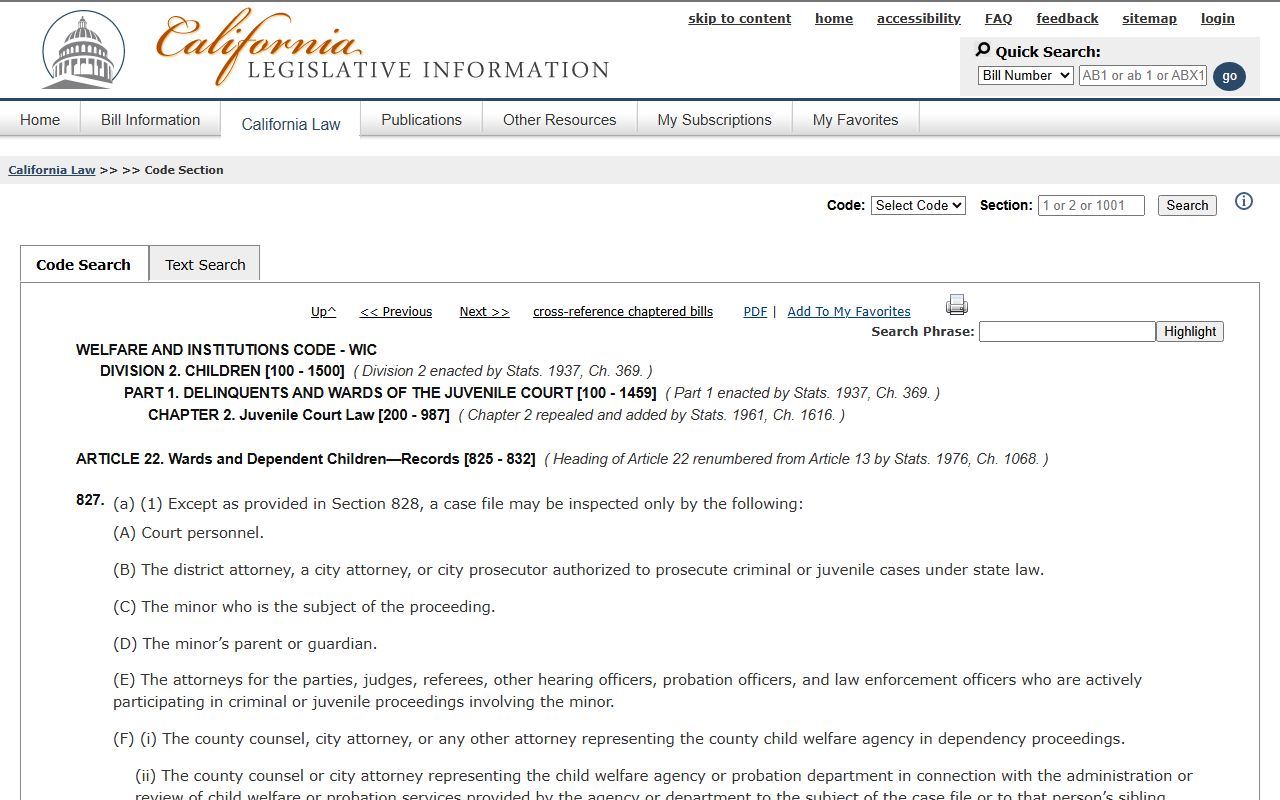
WIC 827 sets the rule that juvenile records sit outside open public access.
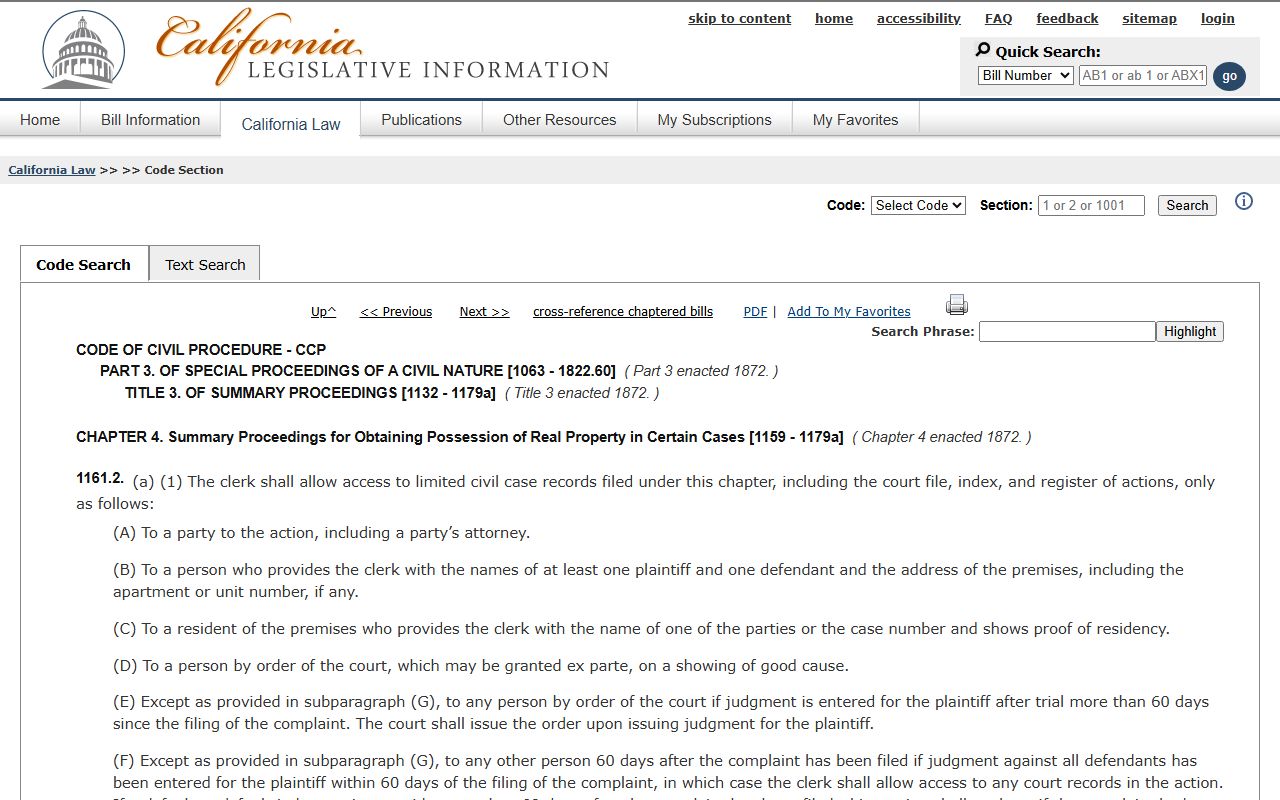
CCP 1161.2 explains why Contra Costa County limited unlawful detainer access is delayed or restricted.
Other restricted areas include sealed records under Rule 2.550, arrests sealed under Penal Code section 851.91, dismissals under Penal Code section 1203.4, mental-health and conservatorship medical evidence, search-warrant affidavits, and personal information such as SSNs, financial accounts, and protected addresses.
What County Offices Hold in Contra Costa County
The Clerk-Recorder, the Superior Court, and the Sheriff each hold a different slice of the public record set. A quick map of who holds what saves trips to the wrong counter in Contra Costa County.
- Clerk-Recorder: deeds, liens, recorded notices, fictitious business names, marriage licenses, and voter records.
- Superior Court Court Records: civil, family law, probate, criminal, juvenile, adoption, and other case files.
- Sheriff's Office: jail roster, in-custody data, and CPRA-covered law enforcement records.
- County departments: budget, contract, policy, and operating records open under CPRA.
- State agencies: California Department of Public Health for vital records, California DOJ for criminal history (restricted), and the Secretary of State for business filings.